AI agents & workflow automation
Agents that use your real tools and data, and unattended workflows that classify, extract, summarise and route — built to be measured, not demoed.
Software engineering studio · Turin, Italy
Little Endian is a small team of senior engineers. We design and ship AI agents and LLM workflows, connected products from firmware to cloud, and the platforms and apps your customers actually use.
What we do
Whether you need a focused application or a large distributed architecture, you get one team that owns the whole path — from the idea to the deployment that keeps running.
Agents that use your real tools and data, and unattended workflows that classify, extract, summarise and route — built to be measured, not demoed.
End to end, with a single team to talk to: hardware bring-up and firmware, edge computing, device communication, cloud backend, dashboards and monitoring.
Service architectures that scale without surprises: containers, orchestration, CI/CD, observability, and the boring reliability work that keeps the pager quiet.
One codebase, iOS and Android, shipped fast. We were early Flutter adopters and run our own apps on it, so we know where the edges are.
From a rough idea to something people can use: scope, architecture, API design, web frontend and the release pipeline behind it. We have done it for clients and for ourselves.
Inherited a codebase that nobody wants to touch? We take over existing systems for cloud migration, refactoring, performance and security work — and keep supporting what we deliver.
AI engineering
A chatbot is the easy part. The value is in agents that act on your systems and workflows that run every day without anyone watching. We build those — on hosted APIs, on models you run yourself, or on both.
Our own products
Client work is only half of what we do. We design, build, run and support three consumer products of our own — which is also why we know what production really costs.

Mobile productLive
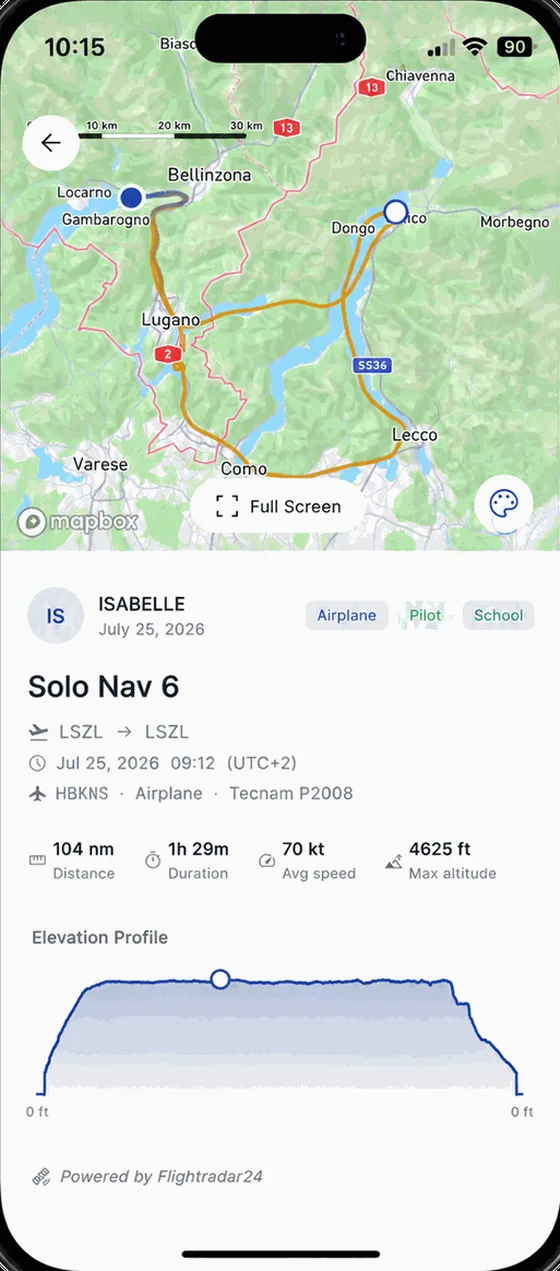
The social network for aviation. Type in an aircraft registration and Volio reconstructs the flight for you — route, distance, duration, speed and altitude from public ADS‑B data, drawn on a map. No manual entry, ever.


Platform & appsLive
An events platform for meeting people offline. GioJoy runs live and online events — sport, dinners, drinks, trekking, theatre — that any member can create, and has grown its community around Turin and its province, with new events every week.

Mobile productIn development
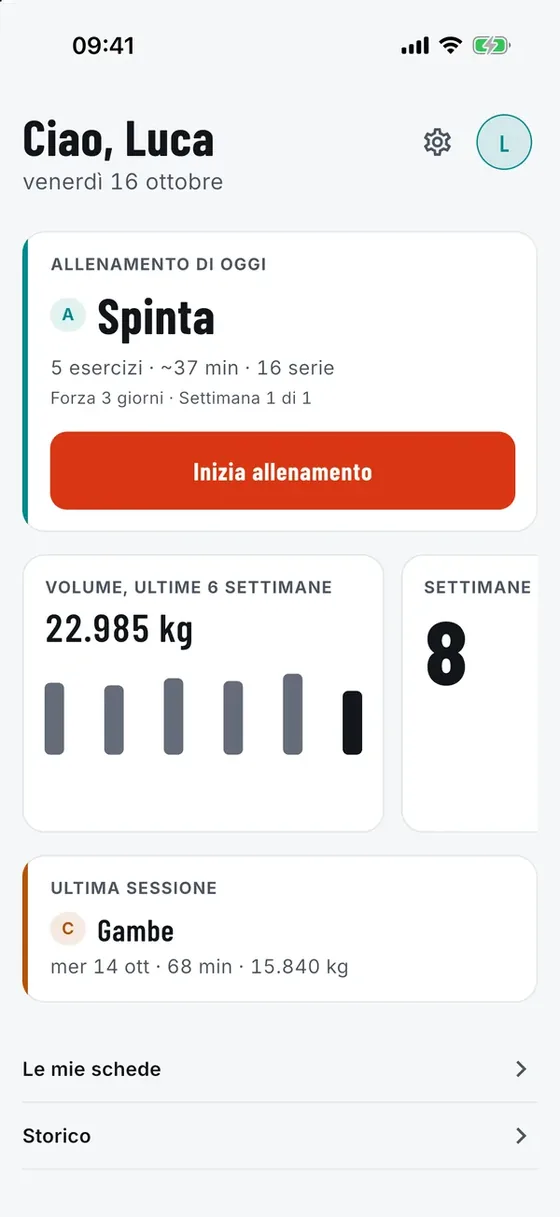
The training notebook for people who lift. Plan your sheets, log every set at the rack, and watch the numbers move. Entirely offline — no account, no server, nothing leaves the phone.
Coming soon to the App Store and Google Play.
Selected work
A few projects we can talk about publicly. Each one started with a constraint that mattered — a deadline, a margin, a factory that could not be rewired.
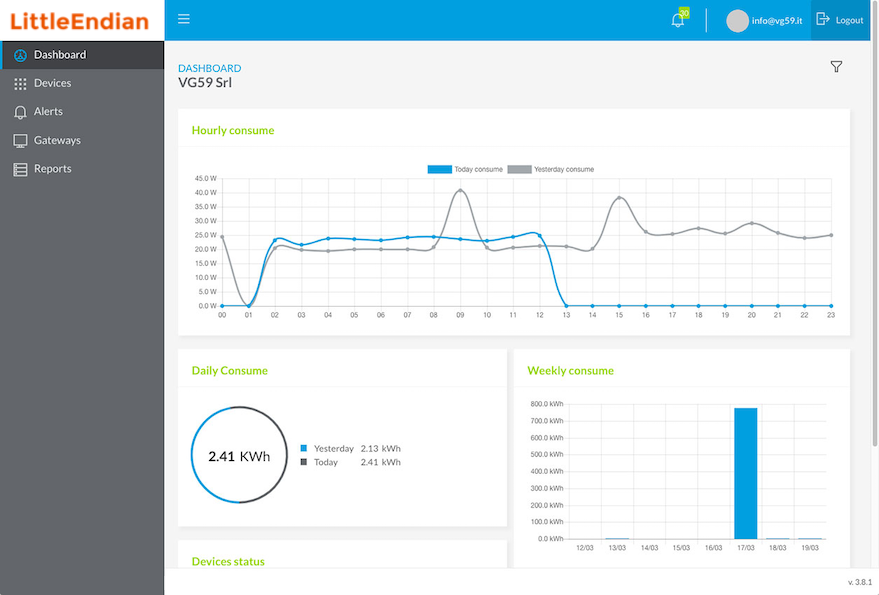
A device and a cloud platform to monitor and control indoor lighting systems, built with the client's lamp manufacturing business.
Our client manufactured lamps sold into offices, shopping centres and other indoor buildings — with no connectivity at all. Maintenance meant sending a team of technicians to each installation on a schedule to look for problems, which was expensive enough to eat visibly into the margin. Meanwhile their own customers were asking for the remote control they had already seen from competitors. Three things had to be solved at once:
Time to market was the hard constraint: customers were already migrating to competitors with smart lighting. We delivered the full stack in parallel.
A complete IoT solution from the device to the cloud platform, which changed how the client's customers run lighting in large offices and malls. Fine-grained consumption data gave them a tangible way to measure energy efficiency and to start doing predictive maintenance. The cost saving in the first year alone covered the entire investment in building the platform.
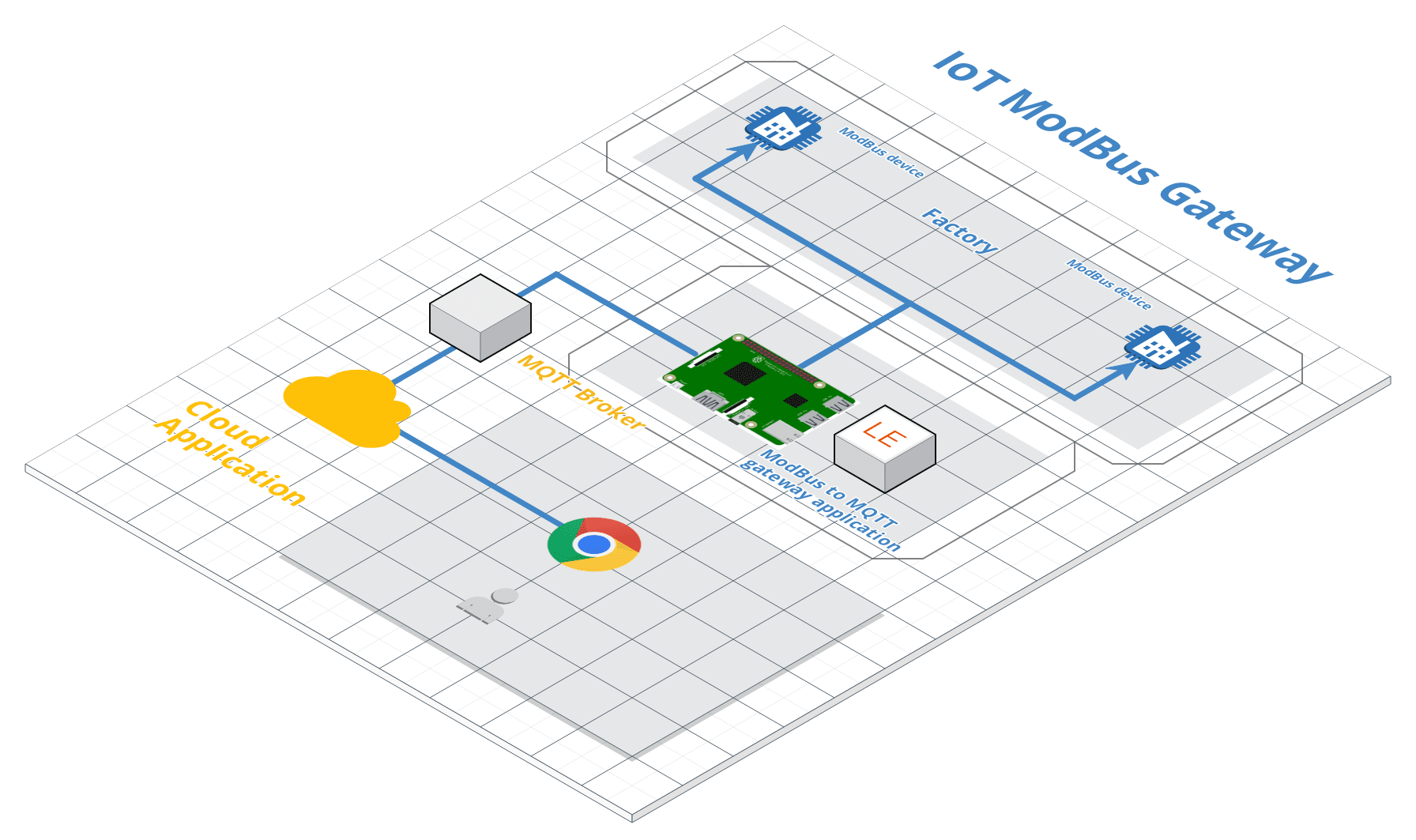
An edge gateway that brings legacy factory devices, locked inside closed networks, into the cloud in near real time.
Industry runs on expensive machines that are often decades behind when it comes to talking to cloud, web and mobile systems. The data inside a factory is valuable, but it is stranded: the devices only speak legacy protocols, on local networks, and replacing them is not an option. Connecting that data to the outside world is exactly where we can help.
A Python application deployed on a Raspberry Pi acting as an edge computing platform. It talks to Modbus devices over RS‑485 and acts as a gateway to the cloud over MQTT — a standard protocol that integrates with practically anything. Production figures and alerts became available in near real time, from anywhere.
The gateway changed what the company could actually control: processes could be watched and reacted to as they happened, not reconstructed afterwards. Because MQTT opened the door to a wide range of platforms, every connected factory optimised its workflow within a short time — a real step forward in efficiency, with no machine replaced.
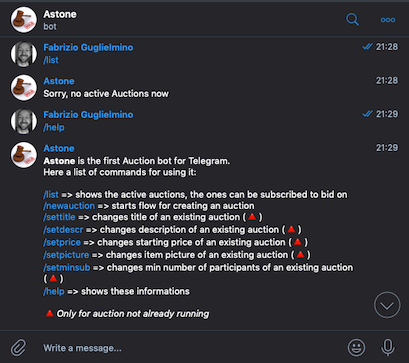
A real-time auction platform built entirely inside Telegram, now the starting point for a family of custom client projects.
This one started as an internal idea. We were asked to build auction systems often enough to notice a pattern: they were all web applications, and they all felt the same. We wanted to try something else and use a platform we like a lot — Telegram — as the whole interface.
A Telegram bot that serves both sides of an auction: people publishing items and people bidding on them. Users create an auction from inside Telegram itself, and an approval step sits in front of publication to keep out content that would infringe copyright or other rules. Once approved, an auction gets a start date and time; when it opens, the bot recreates the pressure of a real auction room through the chat itself.
A proof of concept that has since become the starting point for a number of custom projects, and that we still improve from time to time. The original bot is open source and you can try it live.
Open @AstoneBot on Telegram Source on GitHub
Technologies
We are flexible about technology and we have no interest in selling you a stack you don't need. These are the tools we know deeply enough to be accountable for.
How we work
Plenty of companies make software; only a few make quality software. That is the whole goal here. Review, tests, documentation and a deployment you can trust are part of the work, not an upsell.
You talk to the engineers who are building your product. Project status, source code, environments and release notifications are shared with you from the first week, with the tools we use internally.
Our job is to support you from the idea to the deploy, and after it. That holds whether we build from scratch or take over an existing codebase for migration, refactoring, performance or security work.
Contact
Tell us what you are trying to do. We will tell you honestly whether we are the right team for it, how we would approach it, and what it would take. No forms that go nowhere — your message reaches us directly.